Showing posts with label News n Views. Show all posts

Thursday, March 26, 2009

The Four Fountains

What can make you walk out with a spring your step with only distant memories of the long and busy week that just ended? Why, a relaxing massage at a spa of course!

Day-spas are finally beginning to make an appearance in India. Unfortunately, in spite of our history of Ayurveda and maalish, it has taken us long to embrace something that ought to have commonplace here. Four Fountains Spa now brings the spa experience to Pune in an elegant and soothing ambiance that is attractively priced. Almost all full-body treatments are under Rs. 1000.

Picture of flowers courtesy: Badr Nassem.

Until now, even five-star hotels in Pune did not have good spas; in any case, they operate at a different price-point (almost thrice that of the Four Fountains). As for the low-end options, you can never quite figure out which ones are legal and not a front for other (illegal) kinds of pampering!

Four Fountains Spa PuneI chose the 60 minute Aromatherapy treatment with a blend of eucalyptus and aniseed oils, which promised to recharge the mind. Four Fountains, like most Indian spas, has a policy of same-gender therapists. My therapist today was a young man from Manipur who was friendly and well trained. He explained the process clearly and periodically checked to see if I was comfortable with the pressure and the temperature in the room. I asked him how he found Pune; he said he was very happy here because there is a severe shortage of jobs in Manipur. He also spoke about his concern on the insurgency in that region - his parents still live there.

Four Fountains Spa Pune
Four Fountains Spa PuneAs the masseur expertly kneaded my muscles, working on pressure points, and soon the aroma of the oil and the continued pampering sent me into a state of blissful langour. Before I knew it, an hour had passed and I relectantly got up. A quick shower, and I was ready to face the world - even one where we apparently have been falling off cliffs!

Four Fountains is the brainchild of three friends from IIM-A. They have three spa outlets right now in Pune: in Koregaon Park, Aundh and Magarpatta City. The one in Aundh also has a Salon run by Javed Habib. The spa offers a multitude of treatments: massages, facials, body polishing and body wraps. They have discounts during week days and even gift coupons that you can buy off their website.

As for the spa itself, I was quite impressed with the experience. The locker and shower are built into the therapy room, which speeds up the process considerably. While I have been to many excellent upscale spas, they have almost always been in spa resorts or five star hotels (link). The spa resorts are, of course, a different experience altogether - mostly in terms of ambiance, decor, music, fragrance and other small touches that spell luxury. However, they are far more expensive and not available within Pune. For now, if you are looking to pamper yourself and don't have the time to venture out of the city, Four Fountains is a great option!

Four Fountains provides a wonderful little booklet for Indian spa-virgins. If you are a newbie, are intrigued but don't know what to expect in a spa, you may want to check this one out. A spa - like wine - can be intimidating for a newcomer. Please note, this booklet is tailored for India. I can think of at least two things quite different if you visit a spa outside India: one, the therapist almost always is of the other sex (ie., female therapist for a male guest and vice versa) and two, you disrobe completely, even though some spas do provide (optional) disposable undergarments.
Note: This therapy session was offered complimentary to me because of my blog (that's how they located me). Let me know about your experiences in India spas, especially the Four Fountains, if you have one to share.

Read More...

Monday, March 23, 2009

Breakfast at Leopold Cafe

Mumbai near the TajIt was eerie being at the places which have been burnt into our memories from the non-stop television coverage a few months back. We were in Mumbai for a visit to the Consulate of France for our visas (we expect to be in Paris for our next family vacation in April).

It took me less than three hours to reach the Taj Palace hotel. We had started early to avoid the office traffic in Mumbai; now we had a few hours to kill before our appointment. We strolled around the Taj Palace remembering the events of that fateful day. The sea was filled with small boats and the rising sun reflected off its grey waters.

The Taj MumbaiAs we hunted for a place to have breakfast, we chanced upon Leopold Cafe in the lane behind the Taj. The restaurant had already opened and there were a number of foreign tourists lazily eating breakfast. We seated ourselves close to the bar and ordered masala omelettes, buttered toast and cappuccino while our daughter decided to try the cheese and chicken sandwich. This cafe has existed since 1871 and it certainly looks its age. Among the more popular Irani cafes in Mumbai, the recent notoriety has brought in more visitors. From our table we couldn't see signs of the violence that had killed at least eight on that fateful evening, but when my eyes strayed below, I noticed we were sitting right at the table where a grenade had exploded making a fist-sized hole in the granite floor.

Leopold Cafe MumbaiThe breakfast did us good, and I ordered a second cup of cappuccino before leaving. We then moved to Nariman Point, close to where the French Consulate is located. It felt wonderful - and unreal- to be sitting on the sea-side at Marine Drive on a Monday morning, lazily reading a newspaper and spending time with the family.

Leopold Cafe MumbaiThe sea sloshed against the strange-shaped concrete wave breakers sprinkled along the coastline. Nariman Point, among the world's most expensive business districts, was reclaimed from the sea in the late 60s. Those unusually shaped concrete wave-breakers turns out to be a South African innovation. When solid walls couldn't resist the fury of the seas, these breakers, being more porous, helped dissipate their energy quickly. They were initially called Dolosse, a name given to crude toys made of bone (and used by witch-doctors for rituals). These toys were made of knukle-bones of goats and sheep and shaped like the letter H but with one leg turned away 90 degrees.

Wavebreakers at Nariman Point MumbaiFinally the time arrived and we walked into Hoechst House for our visa appointment. The experience was very positive. They called us the minute of our appointment, and the formalities (which included fingerprints and photo) only took five minutes. Another ten minutes and we had our passports with visas on them. They even included detailed brochures with a CD and maps. I was very impressed!

For our vacation in Paris, I have booked us an apartment very close to the Louvre in the very heart of Paris (here's a link you want to peek). We want to let time move slowly there, so we haven't planned too many activities ahead of time. Right now, we expect to do a wine tour, maybe take a train journey to the South of France, and even a short trip to Barcelona. Watch this space!

Read More...

Sunday, February 22, 2009

February Moments

Desserts at Hornby's Pavillion, MumbaiIt already seems like summer in Pune, but the evenings are cool and very pleasant. I remember how it used to be in Delhi. One day it is winter, and the next day it is summer - there just isn't anything in between. That city never cools down during the summer months, not even during the nights - and all that before we knew about global warming!

Lunch Buffet at Hornby's Pavillion
Lunch Buffet at Hornby's PavillionThis was one of those super busy weeks, and yet I had to find time for a day-trip to Mumbai. I drove down to Mumbai and was surprised how quickly I got to Parel. I couldn't resist sinking my teeth into a freshly made vada-pav with the fiery red dry chutney at one of the food courts on the Expressway.

In between meetings at the ITC Grand Central hotel, we got ourselves a quick lunch at Hornby's Pavillion. The buffet was an impressive spread that even included sushi, a live appam counter - rarities both - and a mix of South and North Indian curries along with a mix of Oriental and Continental food. My Spanish colleague was particularly delighted with the food. Annoyingly (for me), the desserts were mostly western ones with only a plate of mixed Indian barfis and jamuns.

Lunch Buffet at Hornby's Pavillion
Lunch Buffet at Hornby's PavillionNow that Hard Rock Cafe is finally open in Pune (after all the initial glitches and delays), early feedback on the food is good. The items on the menu may seem a little expensive, but the portions are HUGE by Indian standards. Also, they apparently have great fajitas. With no restaurant serving Mexican (or Tex-Mex) in the city yet, this the only place for decent fajitas. Incidentally, Taco Bell is entering India soon; I understand they are opening in Bangalore first.

I must reiterate how good Tareef is: try it if you are a kabab lover located the Aundh area. Do try their Sikandari Raan, Tandoori Chicken, and Garlic Naan. And if you have some space left, the Phirnee. Amazingly good! I also tried Kareem's in East Street for the first time. I had them pack some Sheek Kababs, Murg Kali Mirch and Naan for me; they were excellent.

The pictures here are from the lunch buffet at Hornby's Pavillion at the ITC Grand Central in Mumbai.

Read More...

Thursday, July 17, 2008

Expats in India

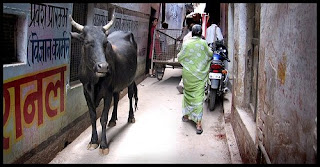
Cow in VaranasiSome of the more fascinating accounts of ancient India were written by foreign travelers.
They came from lands afar, stayed here for a while, and returned with detailed accounts of the land and people of India.

The current breed of foreign travelers interest me too - or rather the India they see through their foreign eyes. I regularly read books and blogs by expats and others who have made India their temporary home. Through their eyes I see an India that is sometimes intriguing and sometimes shocking. It is interesting to see them react to things we take as ‘normal’ and hardly spend time thinking about.

Here are links and excerpts from some blogs I have enjoyed reading in the recent past. Check them out! Please note: All pictures in this post have been sourced from the blogs reviewed here.

The Loud Americans, a blog authored by an American family who have been living in Bangalore since late-2006:

What do you like the most? This one is way too easy. The people, followed by the food! The people we have met, both through work, the OWC, school and our neighborhood are incredible. They are smart, flexible, open, helpful, friendly and welcoming (ten-fold when discussing our cook, maid and driver!!). The food is fantastic and we have each just naturally lost weight here. Yippee! What is the hardest part? Huh... How to answer ... the lack of convenience? (i.e. not being able to drive, cook, have a reliable source of electricity or Internet?) But.. this is probably where we have learned the most in terms of patience and going with the flow instead of against it. The other really hard thing is the poverty. You just don’t get used to it. Its gut wrenching and a daily struggle to see how a good portion of the people in the world live.” more...

Angela got a great photo on the way to work yesterday... a tiny calf riding in between 2 guys on a motorcycle. The best part, the calf was completely complacent and looked very relaxed. Not sure where he was going, but he definitely didn’t mind. Other interesting animals on the highway have been the donkey riding in the auto rickshaw, his head out one end his butt out the other, a camel wandering down the 4 lane highway pulling a cart and the ever present bull carts pulling loads of construction equipment.” more...

Our Time in India, another blog from an expat family who have been in Chennai since Jan 2008:

I discovered that our maid has 1 hen with 4 baby chicks on our property. That was an awesome discovery! If only I could find her eggs…oh well, maybe I need to get a few more hens! There are goats right across the street and a few cows as well. We discovered we had coconut trees (the gardeners shinnied up the tree and picked one for us yesterday), papaya, and banana trees. So far no snakes have been found!more...

There are many dangerous jobs in India. I ran across one occupation this past weekend that just must be electrifying...a man fixing electrical lines.” more...

Our Delhi Struggle, from an American couple who moved into New Delhi some time back:

Varanasi, on the bank of the Ganges. We walked by the yoga class just after sunrise. On the high ledge at the upper right of the picture below, the guru instructed the dozens of white-robed boys in breathing exercises, exhaling ferociously into the microphone as the children attempted to do the same. “That’s not yoga,” said Jenny disdainfully. “That’s just breathing.” more...

The stereotype of India is true: cows wander the streets with impunity…. The prevalence of cow poop as a fuel becomes clear the moment you leave the city. Lining the roads in the countryside — in fact, lining any available space not already given over to crops or housing — are row after row of circular foot-wide cow pies drying in the hot Indian sun.” more...

Michael’s India, a blog from an expat American who takes great photographs everywhere he goes:

Through my travels within the cities of Bangalore, Mysore, Delhi, Agra, and other areas of the country, I have had the opportunity to meet so many warm and friendly people--but the warmest and most sincere are the childrenmore...

And finally, The Englishman in Mumbai, a blog which - unfortunately - is no longer active, but amongst the most humorous:

"Within weeks of my arriving here, it became clear that, in public, Mumbaikers generally like to behave modestly. Women wear pants, very rarely skirts; they wear sleeved blouses, rarely showing bare shoulders; very few couples hold hands or kiss when out strolling (though men-friends do hold hands – but that’s another story). What’s more, those who break these norms get stared at quite hardmore...

Imagine me, fresh off the plane. A security guard at the airport is staring at me, but with no expression (friendly or otherwise) on his face. Now, a stare in England is an invitation to an interchange of some sort, or, if prolonged a few seconds, a sign of aggression. I lock stares with him, but he doesn’t look away or change his expression. This is now becoming (for me) a serious standoff. Angered (I’d had a long flight…) I challenge him: “Do you have a problem of some sort with me?” Only then does he look away, saying nothing. Moment over.” more...

India attracted travelers from everywhere in ancient times. Fa Hien, Huen Tsang, Alberuni, and others took back stories about India to their peoples; a lot of what we know today about ancient India is built upon their detailed accounts. Are these expat blogs going to be an equally important source for historians many years from now?

Other useful Expat blogs and websites:

Read More...

Wednesday, January 02, 2008

New Fad in Japan

From the New York Times: Japanese Envy India's Schools.

Most annoying for many Japanese is that the aspects of Indian education they now praise are similar to those that once made Japan famous for its work ethic and discipline: learning more at an earlier age, an emphasis on memorization and cramming, and a focus on the basics, particularly in math and science.

I, on the other hand, argue for less focus on cramming and memorization so our kids can learn to think out-of-the-box. What do you think?

Read More...

Monday, December 17, 2007

The Other Side of Diversity

A few years back, Robert Putnam, one of the world’s most influential political scientists revealed some bleak side-effects of ethnic diversity on society. Putnam found that living in diverse communities makes us worse neighbours and citizens: “Immigration and ethnic diversity tend to reduce social solidarity and social capital...Trust (even of one’s own race) is lower, altruism and community cooperation rarer, friends fewer,” he wrote.

Putnam's controversial book, Bowling Alone, details his research on diversity and American society; his subsequent work found similar patterns in European and Asian societies too. You can read some more about his work on Wiki.

Science is making other uncomfortable discoveries. As The New York Times warned in a front page story last month, the DNA era is raising “new worries about prejudice”. In the article, Marcus Feldman, a Stanford biologist, explained: “There are clear differences between people of different continental ancestries. And it has the potential to spark a new era of racism if we do not start explaining it better.”

All this, even as countries-- and business -- become increasingly multi-ethnic. I think our societies will be reshaped during the next few years as we learn to reconcile between the meterial benefits of diversity and the strain it creates in our (existing) social fabric.

Even as I (and many of my world traveller blog friends) hope we will learn to live in multi-ethnic societies, Putnam's research shows why immigration is such a hot issue for voters everywhere.

Read More...

Friday, November 30, 2007

The World's (New) Culinary Capital

I had blogged about Michelin's first venture Eastwards. But who could have guessed the result? Tokyo has unseated Paris as the world's culinary capital. Michelin's Tokyo guide awarded 191 stars to 150 restaurants in the Japanese capital, the most number of stars awarded in any city. Previously, Paris had the most stars, at 65.

Eight restaurants in received Michelin's highest three-star rating, and this included two sushi eateries. But Paris can still claim to have the most 3-star rated restaurants, with 10 (France overall has 26).

Michelin Comes to TokyoAt the press conference, Michelin also crowned 82-year-old Jiro Ono of Sukiyabashi Jiro sushi restaurant in central Tokyo the world's oldest three-star chef.

A team of three undercover European and two Japanese inspectors spent a year and a half visiting 1,500 of Tokyo's estimated 160,000 restaurants to decide on the ratings, according to Michelin. The famed guidebook series rates establishments on excellence in cooking, service, decor and upkeep.

Read more details here. This has certainly silenced all those who thought the French cannot be impartial when it comes to food!

Other Michelin posts in my blog:


Read More...

Saturday, November 24, 2007

O Jerusalem!

I like planning my vacations way in advance. I love the process of getting to the actual trip, especially if it involves a country or a city I have never visited before. As I begin planning my next trip abroad, I have been asking myself, "After Europe, what?"

Old Jewish Quarter in JerusalemThe obvious choices are Africa and Australia. I haven't set foot on these continents thus far. While my initial impulse was to do a real African Safari, I have been recently contemplating visiting Morocco and/or Egypt instead. But there is one place that fascinates me no end but I am wary of planning a family vacation in: Israel. Note: Jerusalem picture by Sam Rohn.

I read an interesting article on Israel in the Hindustan Times recently. Completely different from the usual stuff you read about continuing hostilities, the killings and the tragedy.

The author, Samar Halarnkar, begins with this funny observation: First, let's get this out of the way. Israeli women are not just stunning and fit but very stylish. Come to think of it, they are a lot like Iranian women. A friend who has lived in Tehran told me this, tongue firmly in cheek: "If they procreated (ie., the Iranians with the Isrealis), you would have some of the world's most beautiful people."

He goes on talk about how women are ubiquitous in Israel. He says, "Women are everywhere: soldiers with rifles, security personnel manning the country’s ubiquitous x-ray machines, running passport controls — and most look like models. Many tour guides are women, weaving their country’s biblical past into a great national narrative with great passion. I met two energetic grandmothers, both in their 50s (one had a grand-daughter aged 22, another a grandson aged 17), sprinting up stairs and barely breaking into a sweat as they rushed our group of huffing Indian journos from historical site to museum. When we met with President Shimon Peres in Jerusalem, three stooping, old women brought coffee and snacks."

Israeli Tourists in GoaIndians will feel welcome here. Many Isrealis visit India for their vacations; Goa is a popular tourist destination for the young. Here are some interesting notes from the HT article:

There is no country I have visited where being Indian evokes instant acknowledgement — and a smile. Young people behind shop counters, artists, bureaucrats, politicians, middle-aged university professors who may not have gone to India but know enough about it from their children. Even a grim-faced security officer at the heavily guarded presidential home in Jerusalem let down his guard for just an instant to reveal he was heading to India next month."

The biggest surprise came from a young Israeli at an airport bookstore. “Tu marathi bolto (Do you speak Marathi)?” he asked delightedly. His Marathi wasn’t particularly strong, but then he had been to India only once. Uziel Moshe was the son of Maharashtrian Jews, one of 70,000 Jews of Indian origin who streamed into the promised land over the last 30 years. His colleague, an Asheknazi or European Jew, grinned and said: “Woh Marathi bolta hain, main toda Hindi boltan houn (He speaks Marathi, I speak some Hindi).”

All this recognition is aided by the fact that 40,000 Israelis head to India every year to let off steam after their two years of compulsory military service. When you consider that Israel's population would comfortably fit into Mumbai's suburbs, the universal recognition is clear. And links appear when you least expect them.

“Ichaka dana, bechaka dana …” We were driving in the Judean desert heading for the Dead Sea when Tikhva Levin, our guide, who was really a professional archaeologist, suddenly broke into this ancient Raj Kapoor hit. She had been with us for two days and was one of those rare people who showed little interest in India. “You know this song?” Levin asked cheerfully. “It’s from a movie I saw when I was younger. I cried so much. It’s still popular in Israel this movie, The Wanderer. The Wanderer? Ah, she was talking of Awara, the universal Indian hit from Russia to Morocco.

I really hope I will be able to travel to this tiny but historical place during this lifetime...

Read More...

Tuesday, November 20, 2007

Full Circle

There have been a spate of articles - and even books - in recent times on the resurgence of India and China. Yet, not everyone realizes that we are only coming a full circle. Both China and India led the world in scientific endeavor before the 15th century.

Here are some excerpts from a recent article in The Economist (read the original article in full here).

TOWARDS the end of the 11th century, while tardy Europeans kept time with sundials, Su Sung of China completed his masterpiece: a water clock of great intricacy and accuracy.

Clock-making was only one scientific endeavour in which China and India comfortably led the world before the 15th century. China outstripped Europe in its understanding of hydraulics, iron smelting and shipbuilding. Clean your teeth with a toothbrush, rebuff the rain with a collapsible umbrella, turn a playing card, light a match, write, pay—or even wipe your behind—with paper, and you register a debt to China's powers of invention.

India's genius, then as now, was in software not hardware. Its ancient civilisations ushered in a “mathematical revolution” from the fifth century, when Aryabhata devised something like the decimal system. In the seventh century Brahmagupta explained that a number multiplied by zero was zero. By the 15th century, Madhava had calculated pi to more than ten decimal places.

After the 15th century, however, the technological clock stopped in both countries, even as it accelerated in Europe. This peculiar loss of momentum, noted Joseph Needham, a great historian of Chinese science, takes some explaining. Why, he asked, did the science of Galileo emerge “in Pisa but not in Patna or Peking”? Roddam Narasimha of India's National Institute of Advanced Studies reaches a conclusion: “Up to the 18th century, the East in general was strong and prosperous, the status quo was comfortable, and there was no great internal pressure to change the global order,” he writes.

Simon Cox, the author of this article, goes on to make a very insightful observation:

“But even as India's technological powers make a splash in the world, they stir only the surface of its own vast society. India produces more engineering graduates than America. But it has only 24 personal computers for every 1,000 people, and fewer than three broadband connections. India's billion-strong population cuts both ways. Whenever an Indian demographic appears as a numerator, the resulting number looks big. But whenever its population is in the denominator, the number looks small. It is like looking at the same phenomenon from opposite ends of a telescope. As of now, India matters more to technology than technology does to India.”

Read More...

Wednesday, October 31, 2007

Work or Play, Pune Rocks!

The Economic Times' survey today rated Pune as the #1 city in western India to live and work (Mumbai is #2). As per today's ET, the city tops the list in the earnings category (ie., per capita income, job opportunities, employment growth), as an investment destination, and is the 2nd most favored place to live in.

The survey underlines what we (who live here) already knew! This city with a population of 5.13 million is now one of the fastest growing cities in the country. Of the 100,000 people coming into the city every year, about 30% join the manufacturing sector, while 60% enter new-economy industries (IT, biotech, etc.).

Update, Oct 2008: Pune will soon acquire the status of being a metropolitan city in India. According to an Assocham report on ‘The 7th emerging metro city in India’ it owes its upgradation to a fast development pace in the area of infrastructural facilities, friendly business environment, education avenues and employment opportunities.

The report says Pune has a literacy rate of 80.73%, 26 malls & multiplexes, and 17 star category hotels.

Read More...

Sunday, October 07, 2007

Gastronomic Extravagance

It probably won't surprise anyone that London is now the most expensive city to dine in. As per Zagat Survey, the average price of an evening meal in a Zagat rated restaurant is $78 per person. Tokyo and Paris follow close behind with $73 and $ 72 respectively. BusinessWeek provides more details.

Gordon Ramsey LondonHere's a picture of Gordon Ramsey in London. Their $224 seven-course dinner is the most expensive meal in town—and that's without drinks and the 12.5% gratuity. Samplings include roasted foie gras with white asparagus, pan-fried scallops with octopus and parmesan sauce, and roasted duck breast with rutabaga and honey.

The restaurant's celebrity chef has been awarded 10 Michelin stars so far and some of you may have seen him on TV hosting Hell's Kitchen or Kitchen Nightmares on FOX. For other pricey meals in restaurants across the globe, click here.

The Golden Opulence SundaeAnd here's a look at The Golden Opulence Sundae, the world's most expensive at $1000 per serving, at the Serendipity, New York City. Scoops of Tahitian vanilla bean ice cream infused with smoky Madagascar vanilla are coated in 23-carat edible gold leaf, which leaves a ring of gold dust around people’s mouths. Suffused with bittersweet chocolate and rare chocolate chunks, gold-plated dragets and truffles, the sundae is eaten with an 18k gold spoon and a mother-of-pearl spoon is reserved for the mini-bowl of sweetened, de-salted caviar on top. The utensils stay at the restaurant, but the Baccarat crystal goblet is yours for the taking.

The Sultan's Golden CakeFinally, the $1000 Sultan's Golden Cake at the Ciragan Palace Kempinski at Instanbul. It takes 72 hours to make this edible brick of gold, available by special request. Spiked with apricots, pears, quince and figs that have been marinating in Jamaican rum for two years, and flavored with shaved caramelized black truffles, this 24-carat gold leaf-covered cake is presented in a sterling silver handcrafted cake box with a golden seal.

If you have still have any more money left to pamper your taste-buds, click here for other options.

Read More...

Monday, August 13, 2007

So Many Books...

I do most of my reading during the long flights to and from the USA. In recent posts I wrote about Dalrymple's fascinating White Mughals and Anthony Bourdain's absorbing Kitchen Confidential.

BookshelfI recently completed reading Harry Potter and the Deathly Hallows. I was half-expecting Deathly Hallows to be a damp squib given the big expectations, but I must say Rowling did a great job. The book brings back Dobby, Gringotts, Dementors, the flying motorbike, poly-juice potion, Kreacher, the Burrow and so many other characters and locations from the earlier books. Fast paced for the most part, the book begins with a bang and the (much speculated) ending didn't disappoint either; the only part where my interest began flagging was when Harry and his friends kept hopping from tent to tent looking aimlessly for horcruxes. The thing I liked most in this book was how well Rowling handled Snape's character and story.

I am now in the middle of Nassim Taleb's Black Swan. Tabeb underlines how improbable and unpredictable events have shaped the world, from the rise of religions, 9/11, to events in our personal lives. He points out that we have a habit of fooling ourselves that we can reasonably predict the future based on events from the past, when we actually cannot. So far, his ideas are fascinating and refreshingly original, but the book is a little extreme at places and heavy on sarcasm in others.

Update (Aug 14): Other interesting ideas as I continue to read Black Swan: Things, as we know, are all too often discovered by accident. Most of our current technologies are not used in the way their inventors intended them to be. Therefore, Taleb contends, trial-and-error leads to more innovative discoveries than directed research does. And more interestingly he says, humans are better at doing than understanding, and better at tinkering than inventing. But we don't know it (or accept the fact!).

Taleb also talks about scalable and non-scalable jobs. Scalable jobs are those where the work you need to do (input) is directly proportional to your success (output). Example, a baker will have to bake as many more loaves of bread as his customer base goes up. Non-scalable jobs, on the other hand, do not require you to do more work when you become more successful. Example, an actor or a pop star, act/sing the same number of times irrespective of how many people see/hear their work. While many aspire for a scalable job for obvious reasons, chances of success are remote and unpredictable.

And for those who are wondering, the Black Swan of the title comes from the idea that you can't confirm a statement like "all swans are white" by observing white swans. Just as you can't prove that OJ Simpson is not a murderer by closely observing him all day for a year and seeing him murder nobody.

Which still leaves me with India's Unending Journey, Heat, and Sources of Power, all waiting unread on my bookshelf...

Read More...

Friday, August 03, 2007

Incredible 18th Century India

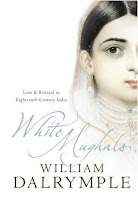
I recently completed reading White Mughals by William Dalrymple. At its core is the improbable love story and marriage between James Kirkpatrick, the East India Company's Hyderabad resident at the end of the 18th century, and Khair Un-Nissa, the grand-daughter of a high ranking official at the court of the Nizam of Hyderabad.

White Mughals DalrympleIn spite of it’s imposing size, the book is a gripping documentation of the times and of history at its most appealing. The book provides new insight into a rarely discussed period of Indian history.

And what a fascinating period in Indian history that was! This was a time when traders, soldiers, and artists from the western world came to visit, but stayed on. They stayed because the Indian princes paid them better, they stayed for the open culture that wasn’t prudish and embraced outsiders, but they also stayed because of the women! Many European officers during this time took up Indian wives and/or concubines. In fact, a third of all wills made by British officers during this period leave property and/or money to Indian women they left behind. Some Europeans during this time even became practicing Hindus and Muslims, in most cases influenced by the women in their lives.

So many British officers and soldiers were ‘going native’ during this time, that England fresh from defeat at the hands of Americans (another population of British-gone-native!) decided drastic measures were called for. And so began a new regime of segregation that discouraged inter-marrying, barring children born of mixed marriages from jobs in the British Army, and discouraging officers from even wearing Indian clothes or using the hookah.

Mughal HaremThe 18th century was also when the only source of diamonds in the known world were mined in Golconda. An era when soldiers frequently defected from the Portuguese, French and British armies to join those of the Indian princes. Both Tipu Sultan and the Maratha armies (two of the best during these times that won many a battle with the British and/or the powerful Mughal emperors of the north) were commandeered by Europeans.

I was completely immersed in this fascinating book during my recent trans-Atlantic flight to the United States. Dalrymple’s other best selling books are the City of Djinns on Delhi and his latest, The Last Mughal, which covers the period of Bahadur Shah Zafar and the Indian Mutiny.

Read More...

Thursday, July 26, 2007

Travel is Not Always Fun

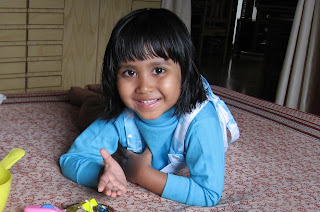
My Little AngelWhile I am in the US, my daughter fell ill and had to be hospitalized in Pune; today she was doing better and I feel a little relieved. As I complete my meetings in the USA, I am counting down the days before I can be back with my family again.
During the early days when travel took so much longer, how difficult must it have been to leave your loved ones behind, not knowing if they were doing alright for months at a stretch? The most difficult part of travelling on business now is having to answer my four year old angel's questions of why I go away without her so many times.

Read More...

Sunday, July 01, 2007

There's a New Chef in Town

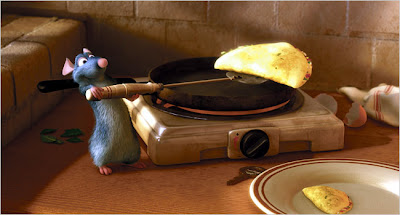
Remy, the new super chef is in town! And the critics are giving him a thumbs-up. I am talking about Ratatouille, Pixar's new animation movie which releases this weekend in the USA.

Pixar RatatoilleThe hero is a young rat, Remy, who lives in the French countryside and has a passion for fine cooking. While the rest of his family is happily content eating garbage and leftovers, he is drawn toward a more lofty notion of food by his refined palate and by the example of a famous chef who insists that “anyone can cook". With unforgettable characters and surprises at every turn, this is the story of how Remy goes on to become a gourmet cook in a Parisian restaurant, no less.

Pixar RatatoilleFellow foodies please note. Chef Thomas Keller, of Per Se in New York and French Laundry in the Bay Area, served as a consultant for the kitchen scenes in this move, and the result is one of the great food movies of all time.
Pixar Ratatoille"Displaying the usual meticulousness associated with the Pixar brand, “Ratatouille” is a nearly flawless piece of popular art, as well as one of the most persuasive portraits of an artist ever committed to film. It provides the kind of deep, transporting pleasure, at once simple and sophisticated, that movies at their best have always promised.", says the New York Times. See what the other critics are saying about this movie at Rotten Tomatoes.

This is animation director Brad Bird's new creation for Pixar after the delightful Incredibles. And for those who are wondering, ratatouille is a traditional French stewed vegetable dish.

Read More...

Wednesday, June 27, 2007

Random Facts Meme

Fellow blogger Wannabe Wino tagged me to tell you eight random facts about myself. So here goes:

1. I collect hotel room key-cards. Here's a photo from my collection of hotels I have stayed in around the world.
2. During childhood, I dreamt of owning the largest personal library in the whole world.
3. I have read all Harry Potter books to date; I expect to read the final one too.
4. The first car I ever drove was a Toyota Camry in the USA; I bought my own car in India only after returning: A Maruti-Suzuki 800.
5. In my first job, I designed electronics for the next generation of battle-tanks for the Indian Army. We actually tested them on real tanks which was quite a thrill!
6. My first PC was a Gateway, my first cellphone was a Nokia, and my first MP3 player was an iRiver. I have stayed loyal to Nokia but not the other two.
7. I smoked for a period of six years before I quit. 'Have stayed away from cigarettes and cigars ever since.
8. I witnessed a shoot-out in Bandra during my very first trip to Bombay.

Hopefully, that was random enough! Now for the difficult part of figuring out who to tag. Let's see... I will tag the following bloggers:

Winnie, Shikha, Melody, Holly Jean, Sakshi, Middle Model, Bee, and Anil. If you play along, you have to list eight random facts about yourself, tag eight other bloggers and let them know they have been tagged.

Cloudy skies and light drizzle outside my window right now. I love the rains! Pune is so much prettier during the monsoon. Spread link love and have a great day!

Read More...

Sunday, June 24, 2007

Out of Africa

Check out Newsweek's cover story on the best that money can buy! Among the best hotel accomodations they listed, this one seems truely out of this world and worth the price:

Singita Tanzania

"Sabora Tented Camp, Singita Grumeti Reserves, Tanzania. Fans of Sydney Pollack's film "Out of Africa" will love this luxurious air-conditioned tent decorated with Persian rugs, gauze curtains and great-game, safari-style furniture straight out of a Hemingway novel.

Go during the summer months, when the wildebeest migration is in full swing. Meryl Streep and Robert Redford not included (room rate approx $850)."

This resort in right in the Serengeti savannah where antelope and zebra join about 1.5 million wildebeest in one of the largest animal migrations every year, ending a three hundred mile journey in search of life-sustaining grasses and water. What a spectacular view that must be!

Read More...

Monday, June 18, 2007

It Happens Only In India...

Here are some things so uniquely Indian that I feel at home the moment I see any of them, especially after a long trip abroad!

LonavalaSee that guy with the array of colored liquids? He sells a variety of slush and drinks. Warning: those of you from the 'developed world' don't want to sample this, unless you have a strong stomach that can survive Indian street food. Honestly, even mine can't any longer!

LonavalaThe next one is our own version of 'corn on the cob'; grilled over charcoal, they usually use a wedge of fresh lime to liberally apply a mixture of salt-red pepper before serving it. A treat for just Rs: 10. This vendor is also selling packets of blackberries. The warning from the first para applies here too. These two photos were taken in front of the Walwan Dam in Lonavala.

Thali, Mystic Masala, Blue Diamond, PuneThe third one is called a thali. It is a traditional Indian meal that is served in multiple bowls placed on a large plate, from which you directly eat. Usually, 'thali' restaurants will serve a particular form of Indian cuisine (such as South Indian, Gujrati, Rajasthani, Marathi, or Punjabi), and one can order multiple helpings for a fixed price. The picture here is of a South Indian thali served at the Mystic Masala in Pune.

LonavalaAnd last of all, the A1 Chikki outlet at Lonavala. This is a traditional Indian candy made with jaggery and nuts (see wiki for more details). Many old cities in India are famous for a particular kind of sweet or a particular variety of street-food; Lonavala is famous for its Chikki, and A1 is one of the premier brands. Vendors selling this sweet in Mumbai and Pune always claim to have sourced their wares in Lonavala.

Read More...

Wednesday, June 13, 2007

So Much to See...

I have travelled more during recent years than ever before, yet my wish-list of places to see just keeps getting longer!

I have a vacation coming up in Switzerland and London during August. Before that I will make yet another business trip to the US that will take me to Orlando, Washington DC, San Francisco and Santa Monica. I also expect to be in Lonavala with friends and family during the coming weekend (that should be fun!). And during the Diwali holidays, I expect to visit my in-laws in Bareilly. That is a lot of travel during the next few months, but I am hungry for more!

The three places on top of my wish list right now are:

Africa: I love the jungles and so does my wife; we spent our honeymoon in the wilderness of the Himalayan valleys close to the Jim Corbett National Park. We have been discussing Africa for a very long time but haven't gotten around to making it real yet. I haven't figured out if I should organize my own 'African Safari' in Kenya (Masai Mara), South Africa (Kruger National Park), Zambia (Zambian side of the Victorian Falls), or from other less popular destinations within Namibia or Botswana.

An Alaskan Cruise: I have to do this one! I love the stark beauty of icy landscapes. Also, I want to spend some time in Canada when I do this; from the pictures and videos I have seen so far, it's one of the prettiest places on earth. I recently bought the DVD set of Planet Earth by David Attenborough; I have always enjoyed his excellent documentaries. The first episode begins with breathtaking panoramic footage of northern Canada that you have to see to believe! I strongly recommend this DVD set to anyone who loves nature; the series has been shot on hi-def video and the results are unbelievable!

Bhutan: A beautiful, small country nestled in the Himalayas between India and China; a land of splendid mountain views, Buddhist monasteries, colorful festivals. Friends who have visited have been here had wonderful stories to tell about the land and its people. This is the closest you can get to one of those isolated, charming, old-world kingdoms you only see in fantasy movies, where time seems to have passed much slower than the rest of the world.

A friend recently gifted me 1000 Places to See Before You Die by Patricia Shultz. I have only read parts of it, but I think she's tried to cover too many places in a single book. I am sure there will be other places in the world that catch my fancy as I go through this book.

Read More...

Friday, June 08, 2007

Pune Fave Five Meme

Sig of Live to Eat tagged me to write about my favorite five restaurants in any city in the world. While I usually blog about all the places I travel to, I haven't yet written much about the city I live in. Therefore, this post will be about my Fave Five in Pune!

1. Bombay Brasserie: Located in Boat Club Road, this restaurant serves excellent North Indian fare. While neighbouring Sigree has more contemporary interiors and better ambience, the food here beats all the competition. This is the place to be in if you love succulent kababs, dum biryani, moghlai curries, and breads. I recommend the Murgh Kali Mirch and Chakori kababs, the Raan Sikandari followed by Gosht Dum Biryani. I personally prefer their Rabdi over the Phirnee for dessert. Update: Bombay Brasserie is located at City Point, Dhole Patil Road. Ph: 66011101; Sigree is located at the same location. Ph: 66027080.

Mainland China Pune2. Mainland China: This restaurant will easily get the vote from Pune'ites for the best Chinese restaurant in town. However, popularity means the restaurant is crowded most nights, especially the weekends. Therefore, make reservations in advance. I recommend the Mongolian Lamb Skewers for starters, burnt garlic chicken soup, Chengdu Clay Pot Chicken with Vegetable Hakka Noodles. The only dessert I like on the menu is Litches with Vanilla Ice-cream. Update: Mainland China is located at City Point, Dhole Patil Road (Ph: 66013030) and in ICC, Senapati Bapat Road (Ph: 66207777).

Mainland China Pune3. Carrots & Celery: While I don't enjoy the food in most buffets, this one is an exception. If you want to taste a variety of Indian, Chinese, and Italian food during lunch, all of which is freshly prepared, this is the place for you. The Indian selection includes kababs, biryanis, curries, and salads. But most of all I love the elaborate dessert spread that includes Indian and western desserts along with fresh fruits and ice-creams.
Update: This restaurant is located at the Sun N Sand hotel. Ph: 26167777

4. La Dolce Vita: This Italian restaurant in town is the place to visit for a special evening. Authentic ingredients, cosy interiors, and an impressive wine list augment an exhaustive menu of pastas, pizzas, and salads. Please note that this is also the most expensive eat-out in town. Update: La Dolce Vita is located at City Point on Dhole Patil Road. Ph: 26145555.

5. Vaishali: I had t0 include this restaurant which the old-timers swear by. Frequented by college students and senior citizens alike, Vaishali serves excellent South Indian and Maharashtrian fast food. They do not take reservations, so the only way to sample the fare is to patiently await your turn. The one dish you must sample here is SPDP (Sev Puri Dahi Puri).

Update: Vaishali is located on Fergusson College Road (also known as F.C.Road), opposite British Council Library and next to the Times of India building.

Pune, being a smaller city than Mumbai or Delhi has lesser upscale dining options; however for a true feel of India, Pune has a variety of choices if you are adventurous enough.

With that, let me tag some others around the world:

1. Kent lives in Cairo, Egypt,travels a lot and writes about his gastronomic adventures at the International Food Blog.

2. Rennyba lives in Oslo, Norway and paints a lovely picture of that country, its people and its food in his blog RennyBa's Terella.

3. Foodette who lives in Los Angeles, California and provides detailed reviews of restaurants she visits on her blog Restaurant Review World.

4. Mel who lives in Melborne, Australia, authors and writes about food on her blog The Secret Foodie.

5. Sank who lives in Twin Cities, Minnesota and writes about life, baseball, and fishing in his blog Old And In The Way.

If you end up participating, here are the rules:

Add a direct link to your post below the name of the person who tagged you. Include the state and country you’re in.

Nicole (Sydney, Australia)
velverse (Kuala Lumpur, Malaysia)
LB (San Giovanni in Marignano, Italy)
eastcoastlife (East Coast, Singapore)
Tigerfish of Teczcape (California, USA)
Amy of Nook and Pantry (Seattle, WA, USA)
Sig of Live to Eat (Seattle, WA, USA)
Traveller's Tales (Pune, India)

List your top 5 favorite places to eat at your location. Tag 5 other people (preferably from other countries/states) and let them know they’ve been tagged.

Read More...